Seeing Wildlife the Right Way
Most wildlife sightings in Banff happen from a road or a trail within a short drive of town, often at the start or the end of the day. This guide covers the essentials for wildlife viewing throughout the park: which animals you might see, the places they turn up most often, the times of day and year to look, and the Parks Canada rules that keep a good sighting from becoming a dangerous one.
Banff Wildlife & Scenic Highlights Premium Tour
A small-group drive through Banff's wildlife corridors, looking for bears, elk and bighorn sheep, with scenic stops at Bow Falls and Lake Minnewanka along the way. The operator says wildlife is spotted on 95% of its tours. Pickup and drop-off are in Banff, the vans have large panoramic windows, and from November to April hot drinks and local treats are included.
Rating and review count are GetYourGuide figures from our latest data pull (30 June 2026); a live re-check was rate-limited at build time. Free cancellation up to 24 hours before. The minimum recommended age is 12, and children 5 and under cannot join. The operator notes that bears usually hibernate from November to April (many leave their dens between late March and mid-May), so winter and early-spring tours focus on elk, sheep and other species.
What Wildlife You Might See
Banff's habitats run from valley-bottom meadows and wetlands to high alpine terrain, and each holds different animals. The ones visitors see most often:
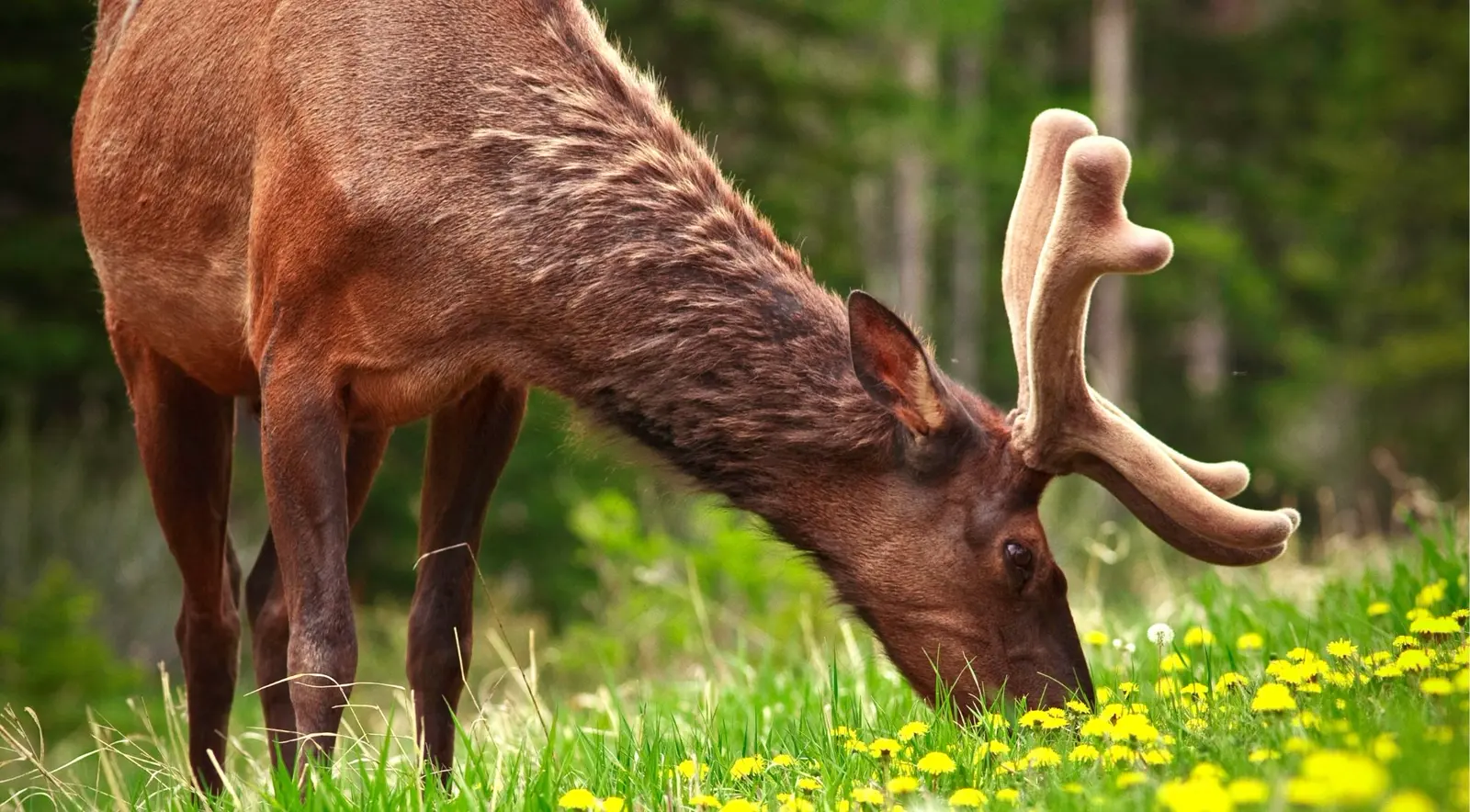
Elk
Frequently seen in open meadows and even inside the Banff townsite, particularly during spring calving season and the fall rut.
Bighorn sheep
Often spotted on rocky slopes and sometimes right beside the road. Parks Canada names Lake Minnewanka, Mount Norquay Road and the top of the Banff Gondola as common places to see them.
Mule deer and white-tailed deer
Common throughout the lower-elevation forests and meadows.
Black bears and grizzly bears
Found throughout the park. They leave their dens between late March and mid-May, are especially active in the valley bottoms in spring and early summer, and again in late summer and fall as they feed heavily before winter.
Mountain goats
Usually on steep, rocky terrain at higher elevations.
Wolves and coyotes
Both live in the park, but wolves in particular are elusive and seen far less often than other species. One well-known pack uses the lower Bow Valley.
Smaller mammals
Pikas, marmots and ground squirrels are common along alpine and subalpine trails.
Birds
Bald eagles and a wide variety of other species, particularly around lakes and wetlands.
No sighting is ever guaranteed, for any species. Seeing a rarer animal such as a wolf usually comes down to luck, combined with time spent in the right habitat at the right time of day.
Other Experiences You Might Enjoy
More ways into Banff's wild country: evening wildlife safaris along the Bow Valley Parkway, the Lake Minnewanka cruise, day trips up the Icefields Parkway past Bow Lake and Peyto Lake, Johnston Canyon, sunrise at Moraine Lake and Lake Louise, and scenic floats on the Bow River.
- 30 mfrom elk, deer, sheep & moose (3 bus lengths)
- 100 mfrom bears, wolves, cougars & coyotes (10 bus lengths)
- $25,000maximum fine for feeding wildlife
- Dawn & duskthe most productive hours for nearly every species
- Aug–Octthe elk rut, from late August to mid-October
Best Locations for Wildlife Viewing
Bow Valley Parkway
The quiet road between Banff and Lake Louise, which also leads to Johnston Canyon, is one of the most consistently productive wildlife corridors in the park, particularly for elk, deer and sometimes bears, above all at dawn and dusk. Part of it closes overnight in spring to protect wildlife: see When to go. The Banff evening wildlife safari (★ 4.1, 603 reviews, from $54) works this dusk window with a guide.
Lake Minnewanka area
The shoreline and the loop road around Lake Minnewanka and Two Jack Lake give good wildlife viewing alongside the lake's other activities, with bighorn sheep often on the road itself. Covered in our Lake Minnewanka guide; the Lake Minnewanka cruise (★ 4.7, 1,004 reviews, from $56) scans the shoreline from the water.
Vermilion Lakes
Besides being a top photography spot, as our Banff photography guide explains, the Vermilion Lakes wetlands draw a wide range of birds and other wildlife, particularly in early morning and evening. Vermilion Lakes Drive is a short, flat road just west of town, so it makes an easy first outing.
Icefields Parkway
The Icefields Parkway runs through excellent habitat: bighorn sheep and mountain goats are commonly seen on the roadside cliffs, and bears are active in the valley bottoms and meadows, particularly in spring. A guided day up the Parkway to Bow Lake and Peyto Lake (★ 4.7, 55 reviews, from $77) lets you watch the slopes while someone else drives.
Banff townsite
Perhaps surprisingly, the town and its edges are a reliable place to see elk, particularly during spring calving and the fall rut, when they gather on open ground such as the golf course and other grassy spaces. Elk this close to people call for extra caution, as the safety section below explains.
Best Time of Day and Season
Dawn and dusk are the most productive times for nearly every species. Many animals are most active in low light and rest through the warmest part of the day, so an early start or an evening drive does more for your chances than any single location.
Spring
Bears come out of hibernation (late March to mid-May) and forage actively in the valley bottoms, and elk give birth to their calves, mostly from mid-May to early July. Cow elk defend newborns by kicking and charging at people: never come between a cow and her calf, give them extra room, and if one comes at you, get behind a tree or a vehicle (see the safety section below).
Fall
The elk rut starts in late August and can last until mid-October: a loud, dramatic season when bulls bugle and compete for mates. Never park between a bull and his cows. Bears are in a period of intense feeding (hyperphagia), eating for up to 20 to 23 hours a day before winter, so they are focused on food and more likely to be met near food sources such as buffaloberry patches.
Winter
Overall activity drops, but some species, such as elk and bighorn sheep, move down into the lower valleys where food is easier to reach, and they can be easier to spot against the snow.
Bow Valley Parkway restrictions
From March 1 to June 25, the 17 km stretch between the Fireside picnic area and Johnston Canyon Campground is closed to all travel, including cycling and hiking, from 8 p.m. to 8 a.m., to protect wolves, cougars and bears. Under a cycling pilot that runs to 2030, the eastern 17 km is also closed to public vehicles in spring (April 30 to June 25) and fall (September 1 to October 6). Check the Parks Canada road report before planning a dawn or dusk drive there.
Wildlife Safety Guidelines
Following the official guidelines protects visitors and the animals themselves.
- Keep your distance at all times. Parks Canada asks you to stay at least 30 metres (three bus lengths) from elk, deer, sheep and moose and 100 metres (ten bus lengths) from bears, wolves, cougars and coyotes. Elk can still be dangerous, particularly during calving season or the rut, so err toward more distance however calm an animal looks.
- Never approach wildlife for a photograph or a closer look. It is one of the most common and most dangerous mistakes visitors make. It puts you at risk, and it teaches the animal to tolerate people in ways that end badly for it.
- Never feed wildlife, even species that seem harmless. Feeding, including by accident through badly stored food or garbage, gets animals used to human food, leads to dangerous encounters and can end with the animal being destroyed if it becomes a persistent safety risk. It is also illegal, with fines of up to $25,000.
- Carry bear spray when hiking, know how to use it, and keep it where you can reach it quickly, not buried in a pack. Used correctly, bear spray is widely regarded as an effective deterrent in close-range encounters. You cannot fly with it: bear spray is banned from both carry-on and checked bags on Canadian and US flights, so buy or rent it on arrival. Outdoor shops in Banff and Wilson Mountain Sports in Lake Louise rent it, as does RentBearSpray.ca at the Banff Train Station.
- Make noise while hiking, particularly where you cannot see far ahead or near running water, so you do not surprise a bear or another animal at close range.
- Respect seasonal closures. Parks Canada closes areas and restricts trails to protect sensitive wildlife activity, such as bear feeding areas and calving grounds. Respect them even if it means missing a trail or a viewpoint.
- If you see wildlife beside the road, pull over safely into a designated pullout, never in a travel lane, and watch for "wildlife jams": clusters of stopped cars around a sighting, which are hazards in themselves for drivers and animals alike. Parks Canada's own advice is to slow down, stay in your vehicle and, if a jam builds, move on.
- Report dangerous wildlife encounters to Parks Canada. Bear, cougar, wolf and coyote sightings and encounters go to Banff Dispatch at 403-762-1470, which helps staff monitor and manage wildlife safety across the park.
Wildlife Viewing from Vehicles
Much of Banff's wildlife viewing happens from the comfort and relative safety of a car, particularly along the Bow Valley Parkway and the Icefields Parkway. When you are watching from a vehicle:
- Stay in your vehicle near larger or potentially dangerous animals such as bears, unless you are at a safe distance and a suitable place to get out.
- Use a telephoto lens or binoculars for a closer look instead of moving closer.
- Mind the traffic and other drivers when you stop, and use designated pullouts instead of blocking a travel lane.
- Keep windows up and doors closed if an animal approaches your car, and never try to feed or touch any animal from the vehicle.
Guided Wildlife Tours
If you want expert help and better odds, a guided wildlife tour is the simplest route. Guides keep track of where animals have been seen recently, can greatly improve your chances of a good sighting, and make sure the distance and stopping rules are followed throughout. Our Banff tours guide compares every type of tour in the park. The wildlife-focused options on GetYourGuide:
- Banff Wildlife & Scenic Highlights Premium Tour (★ 4.4, 285 reviews, from $105): our pick above, small groups through the wildlife corridors with Bow Falls and Lake Minnewanka.
- Banff Evening Wildlife Safari (★ 4.1, 603 reviews, from $54): the cheapest and the most booked, timed for dusk, in groups of up to 24. Its rating is lower than the others, so read recent reviews first.
- Banff Wildlife and Sightseeing Minibus Tour (★ 4.6, 151 reviews, from $63): a morning tour that mixes wildlife spotting (elk, deer, bighorn sheep) with Lake Minnewanka, Bow Falls and the Banff Springs Hotel.
- Banff Twilight Wildlife & Alpine Lakes Sunset Safari (★ 4.6 from only 28 reviews, from $139): an evening safari with a flexible route and lake, hoodoo and waterfall stops; newer, so check the latest reviews.
Tips for Successful Wildlife Viewing
- Go out at dawn or dusk for the best chance of sightings across most species.
- Bring binoculars or a telephoto lens so you can watch and photograph animals from a safe distance.
- Be patient. Sightings often come from time spent quietly watching likely habitat, not from driving around searching.
- Check the current Parks Canada wildlife bulletins before your visit for recent sightings, closures and safety advisories that affect your plans.
- Consider a guided tour if wildlife viewing is a priority and you want local knowledge.
- Always put safety ahead of a photo or a closer look, for your own protection and the animals' wellbeing.
Wildlife Viewing in Banff: FAQ
What animals can I see in Banff National Park?
Commonly seen wildlife includes elk, bighorn sheep, mule and white-tailed deer, black and grizzly bears, mountain goats, and smaller mammals such as pikas and marmots, along with a wide variety of birds, including bald eagles. Wolves are present but more elusive.
When is the best time to see wildlife in Banff?
Dawn and dusk are generally the most productive times of day. Spring is good for bears coming out of hibernation and for elk calving, while fall brings the elk rut (late August to mid-October) and bears feeding heavily before winter.
Is it safe to see elk in Banff townsite?
Elk are commonly seen in and around the townsite, but they can still be dangerous, particularly during spring calving season and the fall rut. Stay at least 30 metres (three bus lengths) away and never approach them.
What should I do if I see a bear while hiking?
Carry bear spray and know how to use it, make noise while hiking so you do not surprise a bear, and follow Parks Canada's guidance for bear encounters: keep at least 100 metres (ten bus lengths) away and never approach.
Where are the best spots for wildlife viewing in Banff?
The Bow Valley Parkway, the Lake Minnewanka area, Vermilion Lakes and the Icefields Parkway are all commonly productive, and elk are seen regularly within the Banff townsite itself.
Can I feed wildlife in Banff?
No. Feeding wildlife is illegal, with fines of up to $25,000, and it is dangerous even when unintentional: it gets animals used to human food, and an animal that becomes a persistent safety risk may ultimately be destroyed.
Should I book a guided wildlife tour?
It can improve your chances of a good and safe sighting, particularly if you are unfamiliar with current animal activity or want expert guidance. Guides know where animals have been seen recently and handle the stopping and distance rules for you. See our Banff tours guide for more.