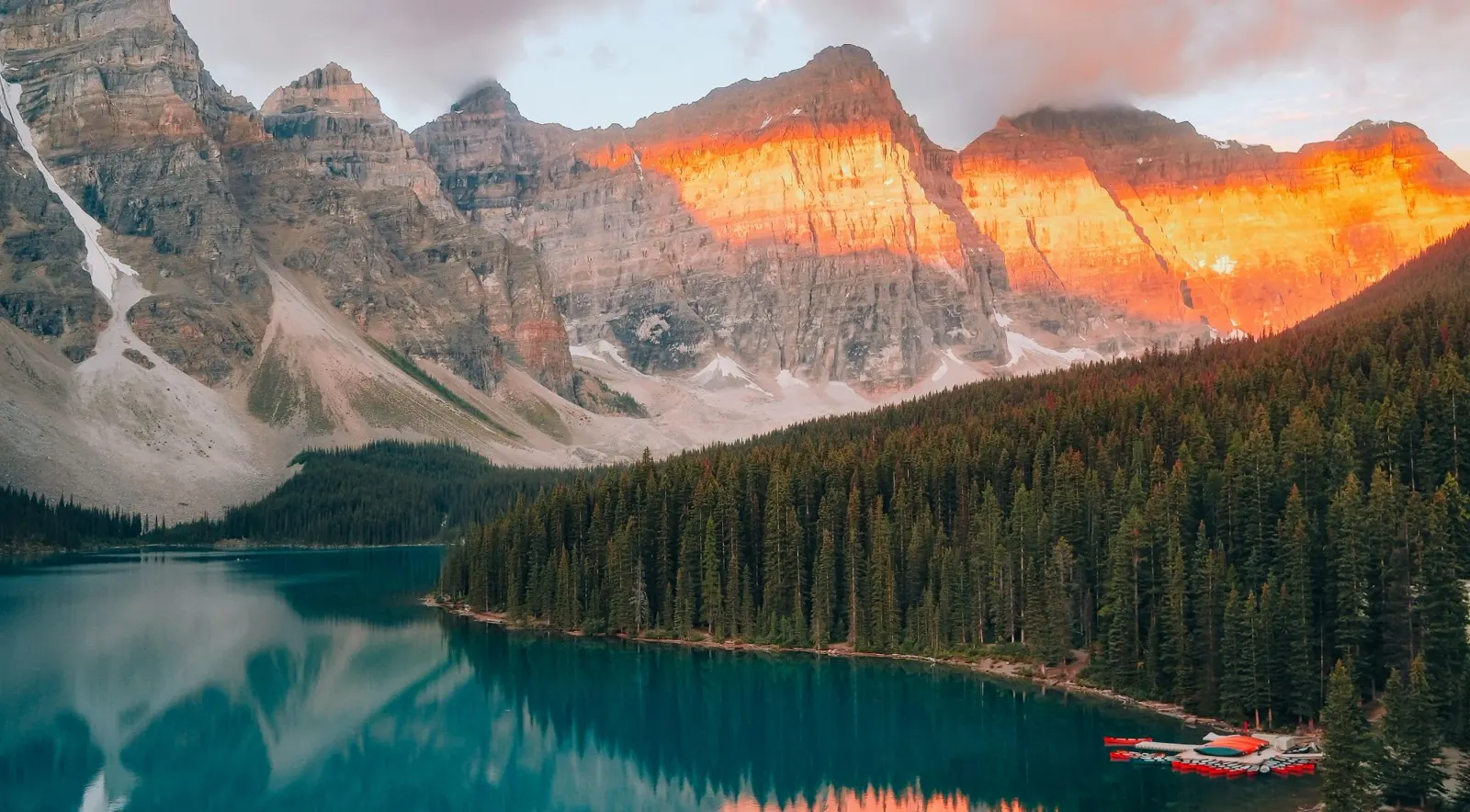
Plan Around the Light, Not the Gear
Even casual photographers come home from Banff with striking images, because the scenery does most of the work. What separates a good frame from the one on the postcard is timing: calm water, low warm light and an empty shoreline all come together in the first hour of the day and fall apart by mid-morning.
This guide covers the best photography spots in the park, why sunrise matters so much here, how to reach the restricted lakes before dawn, and how to shape a whole day around the shots you are after.
Moraine Lake Sunrise & Lake Louise Golden Hour Experience
The shuttle is timed to reach Moraine Lake before sunrise, so you can claim a spot on the Rockpile while the Valley of the Ten Peaks is still in shadow, then moves on to Lake Louise for golden hour before the day crowds arrive. Hot coffee, tea or hot chocolate and blankets are provided for the wait in the dark, the Moraine Lake access fee is covered, and pickup runs from hotels and Airbnbs in Canmore, Banff and Lake Louise. The van stays parked nearby, so you can leave spare layers and a tripod bag on board between the two lakes.
Rating and review count are the figures published elsewhere on this site after a live check on 8 September 2026. Free cancellation up to 24 hours before. The Banff National Park pass, meals and canoe rentals are not included; see our park pass guide for current fees.
Why Sunrise Matters So Much in Banff
Banff's most famous lakes are extremely popular. By mid-morning in peak season, crowds and parking congestion make an unobstructed shot hard to get, let alone the calm, glassy reflections that made these places famous. Wind usually picks up as the day warms and breaks those reflections apart.
Arriving for sunrise solves several problems at once. The light is at its most dramatic (soft, warm and directional), the water is most likely to be still, and you have far more room on the shoreline before the day's visitors arrive.
This matters most where access is restricted. Moraine Lake is closed to private cars, so a sunrise shot there means booking an early shuttle or a guided sunrise tour well in advance. Our Moraine Lake guide covers every access option.
Other Experiences You Might Enjoy
More ways to put yourself in front of Banff's best views: sunrise and golden-hour tours of Moraine Lake and Lake Louise, the Lake Minnewanka cruise, the Banff Gondola up Sulphur Mountain, day trips along the Icefields Parkway to Peyto Lake and Bow Lake, Johnston Canyon and dusk wildlife drives.
- 4 & 5 a.m.Alpine Start shuttle departures to Moraine Lake
- ~120stone steps up the Rockpile viewpoint
- 0reservations needed at Vermilion Lakes
- 30 mminimum distance from elk, deer, sheep & moose
- 100 mminimum distance from bears, wolves, cougars & coyotes
Golden Hour and Blue Hour in the Rockies
Blue hour
The period just before sunrise and just after sunset, when the sky turns deep blue and the light is soft and even. It is excellent for mood, and for long exposures of moving water or star trails as darkness gives way to colour.
Golden hour
The period shortly after sunrise and shortly before sunset, when the sun is low and the light is warm and directional. This is when alpenglow, the pink-orange light that hits the peaks at dawn and dusk, is most visible, and it is one of the signature effects photographers chase in the Rockies.
Banff sits in a valley ringed by tall peaks, so the sun often does not clear the ridgeline until well after the official sunrise time, and it can drop behind the mountains before the official sunset. The usable golden-hour window at any one location can differ from what a sunrise calculator tells you. Scouting a spot in advance, or looking up how the light falls there, pays off.
Top Photography Locations in Banff
Moraine Lake
The classic shot: the Valley of the Ten Peaks reflected in intensely turquoise water, ideally from the Rockpile viewpoint at sunrise when the water is calmest and the peaks catch the first light. With no private car access, getting there for true sunrise takes planning: the Parks Canada Alpine Start shuttle (4 a.m. and 5 a.m. departures from the Lake Louise Lakeshore lot), a Moraine Lake sunrise tour, or another licensed operator's early access. It is one of the most rewarding and most competitive locations in the park, so arrive as early as your access option allows. The Rockpile is about 120 stone steps up and is not wheelchair accessible.
Lake Louise
Another iconic reflection shot, with the historic Fairmont Chateau Lake Louise as a foreground or background feature depending on how you frame it, and the Victoria Glacier at the far end of the lake. As at Moraine Lake, early morning brings the calmest water and the thinnest crowds. The ~400-space lakeshore lot is usually full by 8 a.m. in peak season, so see our Lake Louise shuttle guide for how to get there.
Lake Minnewanka
A larger, less crowded lake with strong sunrise and sunset photography, particularly along the shoreline trail, and none of Moraine Lake's access restrictions: you can drive there. It suits photographers who want dramatic mountain-lake scenery with far less competition for a good spot. The Lake Minnewanka cruise (★ 4.7, 1,004 reviews, from $56) adds a view from the water toward the Devil's Gap. More in our Lake Minnewanka guide.
Vermilion Lakes
Just outside Banff townsite, Vermilion Lakes is one of the most accessible and reliable sunrise and sunset locations in the park, valued above all for Mount Rundle reflected in calm water. Three wooden docks along Vermilion Lakes Road make natural foreground anchors. There is no shuttle to book and no long drive, so it works on its own for a strong shot without the logistics of Moraine or Louise, or as an easy add-on before or after an early shoot elsewhere.
The Icefields Parkway
Stops such as Bow Lake and Peyto Lake are strong photography locations, above all Peyto's distinctive wolf's-head shape and vivid colour from its elevated viewpoint. The drive is long, so treat the Parkway as a dedicated day and time your arrival at the key stops for good light where you can. Our Icefields Parkway guide covers every stop, and a guided day to Peyto Lake, Bow Lake and the Crowfoot Glacier (★ 4.7, 55 reviews, from $77) handles the driving if you would rather watch the light than the road.
Johnston Canyon
Best known as a hike, Johnston Canyon offers unusual photography along its catwalks, above all of the waterfalls themselves. The canyon walls create a naturally shaded, diffused setting, so overcast days and the softer light of early morning and late afternoon usually work better here than harsh midday sun, which creates hard contrast in the narrow canyon. It features on many day tours, including this Lake Louise, Moraine, Emerald Lake and Johnston Canyon tour (★ 4.7, 195 reviews, from $63).
Banff Gondola / Sulphur Mountain
For sweeping panoramas of the Bow Valley and the surrounding peaks, the summit of Sulphur Mountain, reached by the Banff Gondola, gives a different perspective from lake level: wide vistas instead of intimate reflections. Soft evening light suits it best: in summer 2026 (June 20 to September 7) the first ride up is at 8 a.m. and the last at 8:30 p.m., so the summit is an evening and golden-hour spot, not a sunrise one. Check current hours for your dates before you go. Tickets: Banff Gondola admission (★ 4.7, 4,500+ reviews, from $66).
Wildlife Photography
Wildlife photography in Banff takes patience, the right gear (a longer telephoto lens is essential if you are going to keep a safe, respectful distance) and, above all, a firm commitment to wildlife safety. Never approach an animal for a photograph. Parks Canada asks you to stay at least 30 metres (three bus lengths) from elk, deer, sheep and moose and 100 metres (ten bus lengths) from bears, wolves, cougars and coyotes. The rules exist for your safety and to stop animals getting used to people, and feeding wildlife is illegal, with fines of up to $25,000.
The Bow Valley Parkway and the areas around Lake Minnewanka and Vermilion Lakes are commonly productive for sightings, particularly at dawn and dusk when animals are most active. Our wildlife viewing guide covers where and when to look in more detail. If you would like a guide who knows where to look at that hour, the Banff evening wildlife safari (★ 4.1, 603 reviews, from $54) runs through the dusk window. Keep your expectations realistic: sightings are never guaranteed, and no photograph is worth compromising your safety or the animal's.
Night Sky and Astrophotography
Away from the townsite, Banff has relatively little light pollution, which makes it a strong destination for night-sky photography: Milky Way shots in the right season and, occasionally, the aurora during periods of strong solar activity. Vermilion Lakes and other spots away from direct town lighting are popular for pairing a foreground landscape with a dark sky.
As with every kind of timing in this guide, check the moon phase and the weather forecast before planning a night shoot. A bright moon or cloud cover will wash out the stars or the aurora.
Practical Tips for Photographers
- Scout locations the day before if you can, especially lakes with restricted access, so you know exactly how you will get there for sunrise.
- Check the weather and cloud forecast. Clear skies are not always best for dramatic light: some cloud can intensify sunrise and sunset colour, while a fully overcast sky flattens contrast.
- Bring a tripod for blue hour and golden hour, and for any long-exposure water or night-sky shots.
- Pack layers and prepare for cold, especially at sunrise, when valley-bottom temperatures can be far colder than during the day, even in summer.
- Respect trail and area closures, including wildlife-related restrictions, even if it means missing a particular shot.
- Book access in advance for Moraine Lake and Lake Louise if sunrise timing matters. See our Moraine Lake guide and Parks Canada reservation guide.
- Consider a guided photography tour if you want help with timing, composition and access without planning it all yourself. The Banff photo tour of Lake Louise, Moraine Lake and Johnston Canyon (★ 4.9 from only 15 reviews, from $59) builds in photo tips and a photo challenge at each stop; it is new, so read the most recent reviews before you book.
A Sample Photography-Focused Day
Pre-dawn
Arrive at Moraine Lake or Lake Louise on your pre-arranged early access (the Alpine Start shuttle, a sunrise tour or another option) for sunrise and the classic reflection.
Mid-morning
As the crowds build, move to a quieter spot such as Lake Minnewanka or Vermilion Lakes for a change of pace and different light.
Midday
Use the harsher light for places that depend less on soft, directional light, such as the Banff Gondola summit for wide panoramas, or take a break and rest before the evening.
Evening golden hour
Head back to Vermilion Lakes or another easy sunset spot for a second round of warm light and calm water.
Night
If the sky is clear and the moon cooperates, try a night-sky session somewhere with little light pollution, such as Vermilion Lakes.
Banff Photography: FAQ
What is the best sunrise spot in Banff?
Moraine Lake is widely considered the top sunrise photography location, though it needs advance planning because private cars cannot drive there. Vermilion Lakes is the most accessible sunrise spot, with no reservation needed.
Do I need a tripod for Banff photography?
A tripod is highly recommended for blue hour, golden hour, long-exposure water shots and night sky photography, though you can manage without one for general daytime shooting.
How do I photograph Moraine Lake at sunrise if the road is closed to cars?
Book the Parks Canada Alpine Start shuttle (4 a.m. and 5 a.m. departures from the Lake Louise Lakeshore lot) or a commercial sunrise tour well in advance. Both get you to the Rockpile before the day's first regular shuttles. Our Moraine Lake guide has the full access details.
Is wildlife photography safe in Banff?
It can be, if you keep your distance at all times, use a long telephoto lens and never approach animals for a better shot. Parks Canada asks you to stay at least 30 metres (three bus lengths) from elk, deer, sheep and moose and 100 metres (ten bus lengths) from bears, wolves, cougars and coyotes. Wildlife safety always comes before the photograph.
When is the best time for Milky Way or aurora photography in Banff?
It depends on the moon phase, the season, the weather and, for aurora, on solar activity. Locations away from the townsite lights, such as Vermilion Lakes, give the best conditions when the other factors line up.
What's the best photography spot that doesn't require advance booking?
Vermilion Lakes. No shuttle reservation is needed, it is a few minutes from Banff townsite, and it offers strong sunrise and sunset photography of Mount Rundle reflected in calm water.