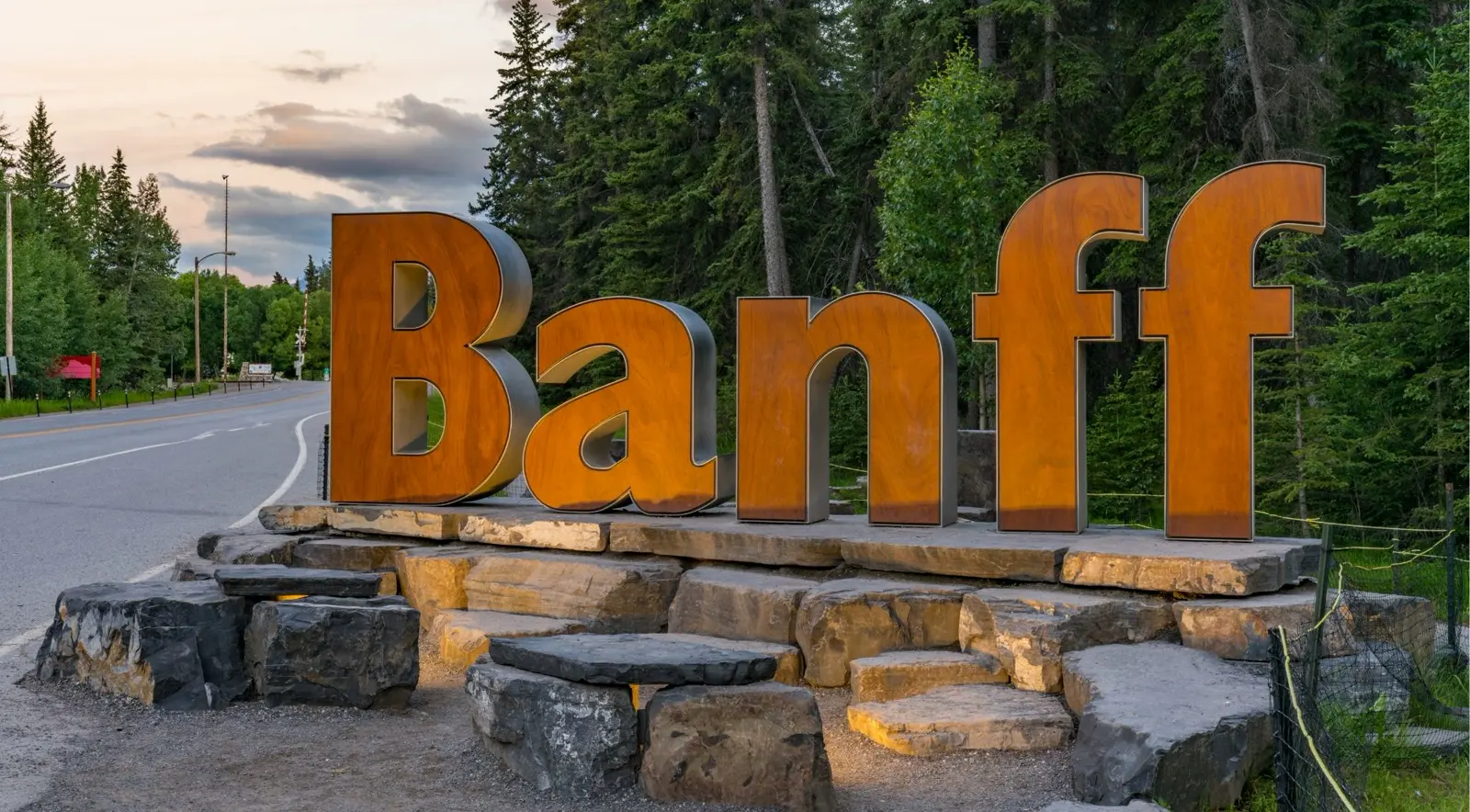
The Bow Valley Has Two Towns, and They Are Not Interchangeable
Banff is the polished one — a compact, intensely walkable resort town inside a national park, with more than a hundred restaurants and an outsized nightlife scene crammed into a few blocks. Canmore, twenty minutes east and just outside the park boundary, is the lived-in one: a former coal-mining town turned Olympic legacy site, with a quieter Main Street, a stronger local dining scene and a genuine arts community.
For the big-ticket attractions in the park itself, see our things to do in Banff hub; for lodging in both towns, see where to stay in Banff National Park; and for which lakes are worth the day, our ranked guide to Banff's best lakes. This page is what happens between those trips — the streets, the menus, the shops and the pubs.
Canmore: Rocky Mountain 1.5-Hour Scenic Bow River Float
The reason a Canmore float sits at the top of a guide about town life: it is the one bookable thing on this page that happens inside one of the two towns rather than an hour out in the park. You meet at the Canmore Public Boat Launch — over the Bridge Road bridge, a short walk from Main Street — and drift the Bow River past the Three Sisters and Ha Ling Peak with a certified interpretive guide talking through the valley's geology, its coal-mining history and what lives in the marshy shallows. No rapids, no experience needed, and it works for all ages.
- Meets at the Canmore Public Boat Launch, 15 minutes before departure
- Experienced guides, PFDs and all safety equipment provided
- Wildlife viewing along the river — elk, waterfowl, beaver sign
- Transport back from the take-out included
Rating and review count are GetYourGuide figures, checked live on 8 September 2026 — 4.90 across 445 reviews, the highest-volume Canmore-based activity on this site. Free cancellation up to 24 hours before. Bring a layer: the river runs cold even in August. If you want whitewater instead of a float, the Canmore recreation section below has the Kananaskis options.
Banff Townsite: Layout & Orientation
Tiny and dense by design — and legally forbidden from becoming anything else.
The Town of Banff occupies a land area of 4.08 square kilometres on the Bow River, and federal law fixes its boundaries: the municipality is legally prohibited from expanding its land base because it lies inside a national park. The result is a compact, intensely walkable core that punches far above its size.
Everything orients around Banff Avenue, the main drag, which runs roughly north–south with Cascade Mountain framing the view at its north end. The commercial heart is the four or five blocks between the Bow River bridge and Elk Street. Bear Street, one block west and parallel, has become the town's dining-and-patio hub. Key cross streets — Wolf, Caribou and Buffalo — hold more shops and restaurants. Walk south across the river and you reach the Fairmont Banff Springs and Bow Falls; walk or bus up Mountain Avenue for the Banff Gondola and the Upper Hot Springs.
Banff's permanent population was 8,305 at the 2021 Census of Population (Statistics Canada), up 5.8% from 7,851 in 2016, giving a population density of about 2,034 people per square kilometre. The town functions under a unique "need to reside" rule: to live here you must work or own a business in the park. That keeps the community small even as visitor numbers swell — the Town of Banff estimates a typical summer day "Visitor Adjusted Population" of around 43,000, and on the busiest days above 50,000. Banff is the only incorporated municipality inside a Canadian national park other than Jasper.
One important 2025 note: the seasonal Banff Avenue pedestrian zone — a car-free stretch of the 100 and 200 blocks that ran each summer since 2020 — was discontinued after residents voted against making it permanent in an August 2024 plebiscite (1,328 against to 1,194 in favour). Vehicles now drive the full length of Banff Avenue year-round, though the sidewalks remain wide and busy. Congestion is a genuine planning concern: per CBC News, the townsite hits its congestion threshold at about 24,000 vehicles a day, and nearly 120,000 vehicles rolled into town over the 2025 Labour Day weekend. Verify the current-season street configuration before you visit, as the town continues to discuss permanent streetscape improvements.
Other Experiences You Might Enjoy
Both towns are launch pads as well as destinations: the Banff Gondola up Sulphur Mountain from Mountain Avenue, the Lake Minnewanka cruise on Roam Route 6, guided days to Moraine Lake and Lake Louise with pick-ups on Banff Avenue and in Canmore, Emerald Lake and Takakkaw Falls in Yoho National Park, Columbia Icefield glacier tours up the Icefields Parkway, whitewater rafting on the Kananaskis River and scenic floats on the Bow River.
- 8,305Banff residents (2021 Census)
- 16,629Canmore residents (2021 Census)
- 100+restaurants in Banff townsite
- $5Roam Transit local Banff fare
- ~20 minto walk Banff end to end
Dining in Banff
More than 100 restaurants in a few blocks, and a local identity built on Alberta beef and wild game.
Banff has more than 100 restaurants packed into its small core, and the local culinary identity leans hard into Alberta beef and wild game — expect elk, bison, venison and trout on menus across price points. Two "must-try Canadian" experiences: poutine (fries, cheese curds, gravy — best sampled after a hike or late at night) and a BeaverTails fried-dough pastry, with two locations on Banff Avenue that frequently draw lines.
Special occasion and fine dining
For a special dinner, The Bison Restaurant & Terrace on Bear Street is the reliable local favourite — farm-to-table Alberta fare, signature braised bison short ribs, and a mountain-view terrace. Chuck's Steakhouse on Banff Avenue is the destination for dry-aged Alberta beef, while Brazen, The Fat Ox and Lupo (Italian) round out the upper tier. Bluebird specialises in live-fire beef. For fine dining with a view, Eden at the Rimrock and the fondue rooms Walliser Stube and the Grizzly House (a Banff Avenue institution since 1967) are memorable splurges.
Mid-range and casual — the Bear Street cluster
Bear Street is the epicentre: Bear Street Tavern (famous pizzas paired with honey and chili oil; no reservations), Farm & Fire (wood-fired, ranch-style), Block Kitchen + Bar (small plates), Nourish (creative vegetarian, home of the "World Famous Nachos") and Three Bears Brewery & Restaurant. Newer arrivals include Banff Social and Good Folk inside the Otter Hotel. For breakfast before a hike, several cafés open early. Reservations are strongly recommended in peak summer and ski season — see our best time to visit Banff guide for when those peaks actually fall.
Nightlife in Banff
An outsized reputation for a town of 8,305 — and every venue within a two-minute walk of the next.
Banff has an outsized nightlife reputation for its size, fuelled by a large international seasonal workforce — you'll hear plenty of Australian, British, Kiwi and Irish accents. The bars cluster within a two-minute walk of each other, making bar-hopping easy.
Dancing Sasquatch (120 Banff Avenue) is the town's late-night dance club, cabin-themed with a raging dance floor, open Wednesday–Sunday until 2 a.m. Directly alongside it, Melissa's MisSteak ("Mel's") is a classic warm-up spot with a stage, dance floor and live bands. Other staples: the Hoodoo Lounge; Wild Bill's (live music and line dancing above Banff Avenue); the Rose & Crown (nightly live music); the St. James's Gate Irish pub; and the Elk & Oarsman, whose rooftop patio and Thursday "Hockey Night in Banff" are local institutions. Tommy's Neighbourhood Pub, below Dancing Sasquatch, and High Rollers (bowling plus beer) are dependable, unpretentious options.
Shopping in Banff
Concentrated on two streets, and the town's best bad-weather activity.
Shopping in Banff is concentrated on Banff Avenue and Bear Street and makes an excellent bad-weather activity. Expect a mix of outdoor gear, souvenirs, art galleries and boutiques. For gear and apparel, Monod Sports is a long-standing local outfitter, with Helly Hansen, Patagonia and other brand stores nearby. Local specialties include the Rocky Mountain Soap Company (natural products) and the Rocky Mountain Flannel Company.
For art, Canada House Gallery represents more than 70 Canadian, Indigenous and Inuit artists and ships internationally, and The Quest Gallery carries jewellery, carvings and sculpture. The Whyte Museum of the Canadian Rockies (covered in our things to do hub) has a well-curated gift shop, and the Indigenous-focused Buffalo Nations Luxton Museum shop supports First Nations communities. Quirky mainstays include The Spirit of Christmas, a year-round festive shop. The seasonal Banff Farmers Market is a good source for local goods.
Practical Banff Logistics
Transit, banks, pharmacies, hospitals and groceries — the detail nobody prints until you need it.
Getting around town
Banff is walkable end-to-end in about 20 minutes, so you rarely need a vehicle in the core. Roam Transit runs energy-efficient local buses: Route 1 serves the gondola and Upper Hot Springs, Route 2 covers Tunnel Mountain, and Route 3 connects to Canmore in about 25 minutes. Local Banff fares are $5, and kids under 12 ride free; the Token Transit app is the easiest way to pay. For airport transfers and driving logistics, see our Calgary to Banff transfers guide.
Banking & currency
Major Canadian banks with branches on Banff Avenue include CIBC (98 Banff Avenue) and BMO (107 Banff Avenue), plus ATB Financial and Bow Valley Credit Union. For foreign exchange there is a dedicated currency-exchange counter — Freya's Jewellery & Currency Exchange — in the Clock Tower Village Mall (108 Banff Avenue), and another reported in Cascade Plaza. Using an ATM is often cheaper than a forex counter.
Pharmacy & medical
Gourlay's Pharmacy (220 Bear Street, in the Bear Street Mall) is Banff's long-standing local pharmacy — family-run since 1923, with a travel clinic and vaccinations — and there is a Rexall in Cascade Plaza (317 Banff Avenue). For medical needs, Banff Mineral Springs Hospital (305 Lynx Street) has a 24-hour emergency department and 24 acute-care beds, serving the town and park year-round.
Groceries & essentials
The main grocery stores are IGA (318 Marten Street) and Nesters Market (122 Bear Street). Cascade Shops (317 Banff Avenue) is Banff's only indoor mall, with a heated underground parkade. The Banff Visitor Centre (224 Banff Avenue) houses both Parks Canada and Banff & Lake Louise Tourism desks, offering maps, passes and trail reports.
Banff National Park: Hop-On Hop-Off Bus Day Pass
Roam Transit solves the townsite; this solves everything past it. Buses leave from the Moose Hotel at 345 Banff Avenue (7:45 and 9:30 a.m.) or the Banff Heritage Train Station (7:50 and 9:35 a.m.), run a guided loop past Moraine Lake, Lake Louise and Johnston Canyon, and return to Banff at 4:55 and 6:00 p.m. You get a guaranteed seat on any bus at any time and a guide on board, so you can step off at a viewpoint and pick up the next one. Depart on the earlier bus: the later you leave, the fewer stops fit in the day.
Rating and review count are GetYourGuide figures, checked live on 8 September 2026 — 4.95 across 349 reviews. Free cancellation up to 24 hours before. The pass is valid for the single date you select.
Canmore: A Destination in Its Own Right
Often pitched as a cheaper place to sleep — which badly undersells it.
Twenty minutes east of Banff and just outside the national park boundary, Canmore is often pitched as a cheaper place to sleep — but that undersells it. Canmore is a genuine mountain town with its own identity, history and culture.
For most of its history, Canmore was a coal-mining town, founded as a railway settlement in 1884 with its first mine opening in 1887. When the last mine closed in 1979, the town faced an identity crisis. The turning point came when Canmore was selected to host the Nordic skiing and biathlon events for the 1988 Calgary Winter Olympics, and the purpose-built Canmore Nordic Centre put the town on the world stage. Canmore never looked back, reinventing itself as a year-round outdoor recreation and arts hub. Its permanent population was 16,629 at the 2021 Census (up from 14,421 in 2016) — considerably more "real town" feel than Banff, with locals, second-home owners and a strong café culture.
The layout centres on Main Street (8th Street) in the historic downtown, framed by the iconic Three Sisters peaks and Ha Ling Peak. The Bow River, Policeman's Creek and walking trails thread right through town. Unlike Banff, Canmore isn't bound by park rules, so it feels more lived-in and less resort-polished.
Dining & Breweries in Canmore
Quietly one of the strongest food scenes in the Rockies — and a genuine craft-beer town.
At the top end, Änkôr (chef Danny Beaulieu) has repeatedly landed on Canada's 100 Best Restaurants list and holds a Wine Spectator award — genuinely destination-worthy contemporary Canadian cuisine. Other standouts include Where the Buffalo Roam Saloon (Main Street, Alberta-focused, great cocktails), Kain Tayo (Filipino-inspired global street food on 9th Street), Tavern 1883 (celebrated elk burger), The Wood (a log building at Main and 8th with the best patio in town) and Gaucho Brazilian Barbecue, Canmore's churrascaria.
Canmore is also a craft-beer town. The Grizzly Paw Brewing Company is the elder statesman (brewing since 1996), with a downtown brewpub plus its larger Tank 310 pub and production facility. Canmore Brewing Company (near the Railway Avenue Safeway) has a cosy tasting room, and The Blake combines a brewpub, distillery and restaurant under one roof. Sheepdog Brewing rounds out the scene.
The Canmore Mountain Market, a farmers market running Thursdays 10 a.m.–6 p.m. from late May to early October at Elevation Place, is a beloved 25-year tradition with over 75 vendors offering local produce, crafts and live music.
Arts, Culture & Festivals in Canmore
The coal-mining and Olympic story you won't find in the tourism-born park towns.
artsPlace (950 8th Avenue) is the community arts centre, hosting live music, films, exhibitions and workshops. The Canmore Museum preserves the town's coal-mining and Olympic heritage. Galleries worth a stop include Elevation Gallery (40+ contemporary artists), Avens Gallery, the Carter-Ryan Gallery (Indigenous artist Jason Carter) and the volunteer-run Canmore Art Guild Gallery inside Elevation Place. Don't miss "The Big Head," a 30-foot public sculpture at Elevation Place named for King Malcolm III "Canmore."
Two major annual festivals anchor the calendar. The Canmore Folk Music Festival — Alberta's longest-running folk festival, drawing over 18,000 attendees (about 5,000 daily) across the weekend — runs the August long weekend at Centennial Park (August 1–3 in 2026). The Canmore Highland Games, a three-day celebration of Scottish culture with heavy athletics, pipe bands and Highland dancing, takes place over the Labour Day weekend (September 4–6 in 2026). Both are worth planning a visit around, but confirm exact dates each year.
Outdoor Recreation in Canmore
An Olympic venue, two in-town loop trails and the tours that don't overlap with the national park.
Canmore's signature attraction is the Canmore Nordic Centre Provincial Park, built for the 1988 Olympics and now a year-round recreation hub about 10 minutes from downtown. In summer it offers over 100 kilometres of mountain-biking trails (from wide dirt roads to expert single-track), a mountain-bike skills park, trail running, disc golf and orienteering; Trail Sports on site rents bikes. In winter it is a premier cross-country skiing and biathlon venue and a national-team training base. A Kananaskis Conservation Pass is required for parking — that is a provincial pass, not the Parks Canada pass you buy for Banff.
Right in town, the Policeman's Creek Boardwalk is an easy 1.24 km loop connecting Main Street to Spring Creek over a bird-filled marsh — a lovely 10-minute stroll (note: no bikes on the boardwalk). Quarry Lake is a popular swimming and picnic spot with an adjacent off-leash dog park and an easy 1.25 km loop trail; Roam Transit Route 12 offers free service from downtown. Grassi Lakes, a short waterfall hike, is covered in our best hikes in Banff guide.
Canmore-specific tours that don't overlap with the national park include whitewater rafting on the Kananaskis and Bow rivers, guided caving in Rat's Nest Cave under Grotto Mountain (with Canmore Cave Tours), via ferrata, and guided e-bike and wildlife tours — of which the morning wildlife viewing tour with Banff or Canmore pick-up (from $105) is the one that actually collects from Canmore. It is a thin listing at 22 reviews (★ 4.5), so read the most recent feedback before booking, and remember no guide can promise an animal. For guided experiences inside the park, see our Banff tours & sightseeing guide.
Kananaskis River Whitewater Rafting
★ 4.9 (436 reviews) · The proper whitewater option: 10+ rapids and a run down an Olympic kayaking race course, with an optional swim spot and river games. All gear included — wetsuit, life jacket, helmet, booties and splash jacket — plus transport from the operator's river base. Runs rain or shine, and everyone signs a waiver in advance. Note the 48-hour cancellation policy, stricter than most tours on this site.
Canmore: 1.5-Hour Scenic Raft Tour
★ 4.8 (265 reviews) · The cheapest way onto the water, and Canmore's only locally owned and family-operated float company. Certified interpretive river guides, glacial water, big mountain views and regular wildlife sightings. Guides meet guests at the river, check waivers and fit PFDs before departure; dry bags are carried for anything you bring.
Rat's Nest Cave guided caving and the Canmore via ferrata are booked directly with their operators and are not sold through the tour marketplace we link to, so there is deliberately no booking button for them here.
Banff vs. Canmore: A Day in Each Town
Same valley, twenty minutes apart, two completely different days.
A day in Banff: start with breakfast at a Banff Avenue café, spend the morning browsing shops and galleries and the Whyte Museum, grab a Bear Street lunch, walk to Bow Falls and the Fairmont in the afternoon, then settle in for Alberta beef or bison at dinner and a lively pub crawl. Banff is more polished, more crowded and more oriented to visitors.
A day in Canmore: begin with locally roasted coffee downtown, ride or hike at the Nordic Centre or stroll the Policeman's Creek Boardwalk, cool off at Quarry Lake, browse Main Street galleries and the Thursday market, then dinner at Änkôr or Where the Buffalo Roam followed by a Grizzly Paw pint. Canmore is quieter, more local and better value.
| If you want… | Choose | Why |
|---|---|---|
| Walkable access to park icons | Banff | Inside the park, Roam Transit to the gondola and hot springs, no daily gate run |
| Nightlife | Banff | A dozen bars and one late-night club within a two-minute walk of each other |
| The strongest restaurant scene | Canmore | Änkôr on Canada's 100 Best list, plus a deeper mid-range bench |
| Craft beer | Canmore | Four breweries in town, led by Grizzly Paw (since 1996) |
| Lower prices | Canmore | Outside the park, no supply cap, more space for the money |
| A rainy afternoon | Banff | Cascade Shops, Whyte Museum, galleries and 100+ restaurants in a few blocks |
| Mountain biking | Canmore | 100+ km of trails at the Nordic Centre, 10 minutes from Main Street |
| Arts, museums and festivals | Canmore | artsPlace, four galleries, the Folk Festival and the Highland Games |
| A local, lived-in feel | Canmore | Twice the population, no "need to reside" rule, less resort polish |
The verdict: base in Banff if you want walkable access to park icons and nightlife and don't mind crowds; base in Canmore if you want a more authentic town feel, a stronger local dining scene and lower prices — and you're happy to drive or bus 20 minutes into the park. Many travellers split the difference and experience both. For a full lodging breakdown see where to stay in Banff National Park, and for seasonal timing our best time to visit Banff guide.
Banff & Canmore Towns: FAQ
Is Banff or Canmore better to stay in?
Banff offers walkable access to park attractions and a lively nightlife scene but is busier and pricier. Canmore is quieter, more affordable, has a strong local dining and arts scene, and is about 20 minutes from Banff by car or Roam Transit. See our where to stay guide for a detailed comparison.
How far is Canmore from Banff?
About 25 kilometres — a 20–25 minute drive, or a 25-minute ride on Roam Transit Route 3, which runs every 30–60 minutes.
Do I need a car to get around Banff town?
No. Banff's core is walkable end-to-end in about 20 minutes, and Roam Transit covers the gondola, the Upper Hot Springs and Canmore. A car is useful for reaching attractions outside town, but not for the townsite itself.
What food is Banff known for?
Alberta beef and wild game — elk, bison and venison — and local trout dominate menus, along with Canadian staples like poutine and BeaverTails pastries.
Does Canmore have good breweries?
Yes — Canmore is a craft-beer destination. The Grizzly Paw (brewing since 1996), Canmore Brewing Company, The Blake and Sheepdog Brewing are all worth visiting.
When are Canmore's main festivals?
The Canmore Folk Music Festival runs the August long weekend (August 1–3 in 2026) and the Canmore Highland Games run the Labour Day weekend (September 4–6 in 2026), both at Centennial Park. Confirm dates each year.
Is there still a pedestrian zone on Banff Avenue?
No. The seasonal car-free pedestrian zone was discontinued after residents voted against making it permanent in an August 2024 plebiscite; vehicles now use the full length of Banff Avenue year-round. Verify the current-season setup before visiting.
What is there to do in Canmore besides hiking?
Mountain biking and disc golf at the Canmore Nordic Centre, whitewater rafting and Bow River floats, guided caving in Rat's Nest Cave, via ferrata, the Thursday farmers market, art galleries, breweries and the Canmore Museum.