Treat Every Number Below as a Planning Estimate
This is our master roundup of the best hikes in Banff National Park, organised by difficulty so you can scan straight to what suits your group. We cover new in-depth trail notes for the major hikes, link you to our detailed destination guides for the iconic lake trails, and give you the essential 2026 safety and seasonal information you need before you lace up.
A note before you go: trail conditions in the Rockies change fast. Distances and elevation figures vary between sources — even Parks Canada, AllTrails and local guides disagree on the same trail — so treat the numbers below as planning estimates, and always check the Parks Canada trail report the morning of your hike. Where sources conflict we have given the range and cited Parks Canada as primary.
Banff Sunshine Sightseeing Gondola & Standish Chairlift
The one hike on this page where you can buy your way out of the climbing. Sunshine Meadows — rated Canada's number one day hike by Lonely Planet — sits above treeline at around 2,400 m, and this single ticket covers both the gondola and the Standish Express chairlift that lifts you the rest of the way. From the top, more than 10 km of maintained trails loop past Rock Isle, Grizzly and Larix lakes. The free Banff shuttle is included and needs no reservation.
- Gondola admission plus the Standish Express chairlift on one ticket
- Free shuttle from Banff, hourly 7:00 am – 3:00 pm; return 8:30 am – 6:30 pm
- Banff's biggest gondola — an 8-passenger cabin
- Wildlife spotting from the gondola, chairlift and observation deck
Rating and review count are GetYourGuide figures, re-checked live on 8 September 2026. Arrive at Sunshine Village no later than 3:00 pm to get a full afternoon on the meadows. Food, drinks and gratuities are not included. The summer gondola runs 7 days a week from July 6 to September 20, 2026; no pets except service animals.
Hikes Already Covered in Our Destination Guides
Some of Banff's most famous trails start at destinations we've already covered in depth. Rather than repeat ourselves, here's where to find the full details.
Rockpile, Consolation Lakes, Larch Valley, Eiffel Lake
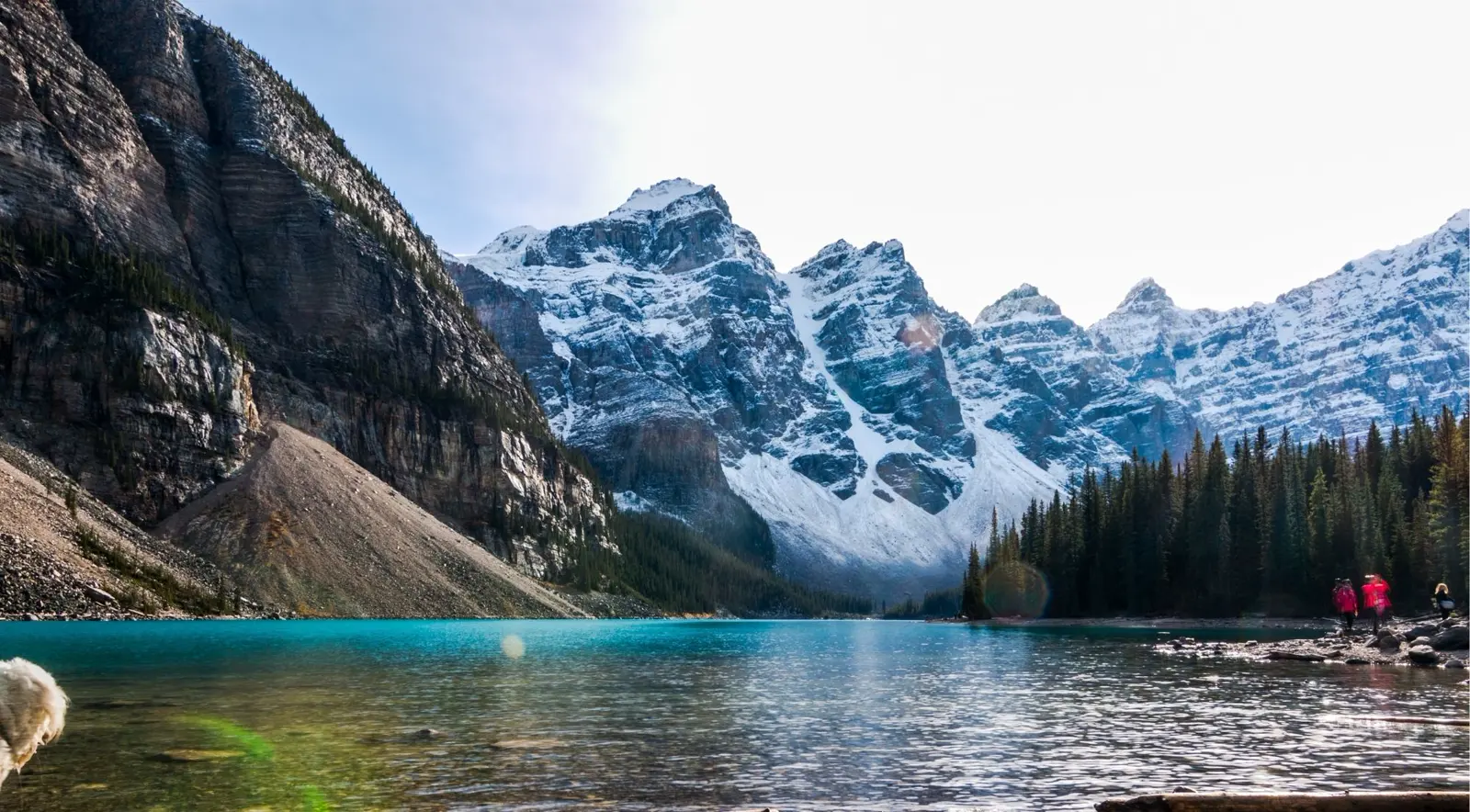
The Rockpile Trail, Consolation Lakes, Larch Valley/Sentinel Pass and Eiffel Lake are all covered in our Moraine Lake guide. Larch Valley is the single most famous larch-season hike in the Rockies.
Shoreline loop, Hamilton Falls, Emerald Basin, Hamilton Lake, Emerald Triangle
The Emerald Lake Loop, Hamilton Falls, Emerald Basin, Hamilton Lake and the Emerald Triangle are covered in our Emerald Lake guide.
Wapta Falls and the Burgess Shale
Wapta Falls and the guided-only Burgess Shale hikes are covered in our Yoho National Park guide.
Everything else, easy to difficult
The rest of this page covers the hikes we haven't detailed elsewhere, sorted by difficulty so you can jump to the level that suits your group.
Worth Adding to a Hiking Trip
Lifts and guided days that put you at a trailhead without a pre-dawn parking battle: the Banff Gondola up Sulphur Mountain, the Sunshine Village gondola to Sunshine Meadows, guided walks at Johnston Canyon, full-day trips to Lake Louise, Moraine Lake and Emerald Lake in Yoho National Park, and Columbia Icefield glacier days along the Icefields Parkway, from Banff, Canmore or Calgary.
- 1,600+ kmmaintained trails (Parks Canada)
- 2,135 mLake Agnes Tea House elevation
- 4+group size required on some trails
- 100 m / 30 mdistance from bears / elk
- Late Septlarch season peak
Easy Hikes in Banff National Park
Suitable for families, casual walkers, and anyone wanting big scenery for little effort.
Fenland Trail
A quiet, flat loop through old-growth spruce forest and wetland right on the edge of the Banff townsite. According to Parks Canada, the Fenland Trail is a 2.1 km loop with no elevation gain, taking about 40 minutes round trip. The trailhead is at the Fenland Trail parking area west of Mount Norquay Road, a 20-minute (1.5 km) walk from downtown Banff. It is a wonderful spot for birdwatching and a peaceful escape close to town. Note that this area is an important wildlife corridor and is sometimes closed seasonally for elk calving in spring.
Sundance Canyon
A family favourite that begins at the historic Cave and Basin National Historic Site. The first stretch is a paved 3.7 km path (one way) following the Bow River — perfect for strollers and easy walking — before reaching the mouth of Sundance Canyon, where a 1.6 km hiking loop climbs through a water-carved gorge with small waterfalls and bridges. Parks Canada lists the full outing at roughly 190 m elevation gain and about 3 hours round trip. The paved section is shared with cyclists; bikes are not permitted on the canyon loop itself. There has been a seasonal area closure along part of the Sundance Canyon Loop, though the trail to the viewpoint has remained accessible — check the bulletin before you go.
Stewart Canyon
A short, scenic hike at Lake Minnewanka, mentioned in our Lake Minnewanka cruise guide as a turnaround point. As a standalone easy hike it is 1.5 km one way — roughly 2.8–3.4 km round trip to the bridge — with minimal elevation gain, taking about 1 hour round trip according to Banff & Lake Louise Tourism. The trail starts at the Lake Minnewanka Day-Use Area, follows the lakeshore, and ends at a bridge over the Cascade River where it enters the canyon.
Important: from July 10 to September 15, Parks Canada requires hikers travelling beyond the Stewart Canyon Bridge — on the Lake Minnewanka and Aylmer trails — to travel in tight groups of four or more carrying bear spray. Dogs and bikes are prohibited in the restricted area during this period. The short walk to the bridge itself is not subject to the group restriction.
Moderate Hikes in Banff National Park
These trails ask for reasonable fitness, rewarding you with historic teahouses and glacier views.
Lake Agnes Tea House
One of Banff's most beloved — and busiest — hikes, ending at a historic teahouse perched beside a cirque lake. From the Lake Louise lakeshore the trail climbs steadily through forest, passing Mirror Lake, to reach the Lake Agnes Tea House at 2,135 m. Distances vary by source: Parks Canada and the teahouse itself cite roughly 3.5 km one way with about 400 m of elevation gain, while AllTrails and some guides record 3.4–3.8 km one way. Plan for 2.5–4 hours round trip.
The Lake Agnes Tea House is one of the oldest in the Canadian Rockies: built by the Canadian Pacific Railway in 1901 as a hikers' refuge, it began serving tea in 1905 and has been called the oldest teahouse in Canada. The original log building was replaced in 1981 but retains its original windows, tables and chairs. It is cash-only and open roughly June through October. From the teahouse, energetic hikers can add the Little Beehive (about 1 km further, ~80 m gain) or the Big Beehive (a steeper climb via switchbacks for panoramic views over Lake Louise). Arrive early — the trail and teahouse get very crowded by mid-morning.
Grassi Lakes
Technically just outside the park boundary near Canmore, but almost always grouped with Banff hikes. Grassi Lakes is a short, scenic hike to two brilliant turquoise lakes, with two route options: an easy wide gravel road, and a more difficult but more scenic forest trail past a waterfall with views over the Bow Valley. Round-trip distance is about 3.4–4 km with roughly 170–250 m of elevation gain, taking 1–2 hours.
⚠ 2026 closure alert: the Grassi Lakes day-use area and the Upper, Interpretive and Reclaimer trails are CLOSED following a rockslide. The Alberta Parks advisory states the closure is effective June 10, 2026, until further notice, noting that "a rockslide has resulted in dangerous conditions for all road and trail users" and that "a significant rockfall event occurred on June 1, 2026." Highway 742 (Spray Lakes Road) access is also affected. Do not plan this hike for 2026 without confirming reopening with Alberta Parks.
Bow Glacier Falls
A classic Icefields Parkway hike starting at Bow Lake behind the historic Num-Ti-Jah Lodge, following the lakeshore before climbing to a thundering waterfall fed by meltwater from the Wapta Icefield — the birthplace of the Bow River. Parks Canada lists it at 4.4 km one way, 190 m elevation gain, about 3 hours round trip; other sources record 5.6–9 km round trip depending on parking. The official trail is now marked at roughly 2.8–3 km to the signed end.
⚠ 2026 status — reopened with warnings: Bow Glacier Falls was closed for more than a year after a fatal rockfall on June 19, 2025 that killed two hikers — Jutta Hinrichs, 70, of Calgary, and Hamza Benhilal, 33, of Surrey, B.C. — and injured three others. Parks Canada reopened the trail on July 16, 2026, following a geotechnical assessment by BGC Engineering and the installation of new warning signs at the end of the official trail. François Massé, superintendent of the Lake Louise, Yoho and Kootenay field unit, cautioned that "the backcountry is a dynamic environment," and the report's author, Dave Gauthier, warned "it would be reasonable to expect further rockfalls." The official trail is open, but do not proceed past the signed end toward the falls base, where rockfall risk remains high. Confirm status before you go.
Difficult Hikes in Banff National Park
Longer, steeper day hikes for fit hikers — serious elevation and big payoffs.
Plain of Six Glaciers
Widely regarded as one of the finest day hikes in the Canadian Rockies, and quieter than the neighbouring Lake Agnes trail. Starting from the Lake Louise lakeshore, the trail follows the water's edge, then climbs through subalpine forest and across glacial moraine to a plain beneath six named glaciers on the flanks of Mount Victoria and Mount Lefroy. Sources vary considerably: Parks Canada lists 5.3 km one way with 365 m elevation gain; local guides record round-trip figures of 13.8–14.2 km with 380–595 m of gain to the end of the trail. Plan for 4–5 hours.
The Plain of Six Glaciers Tea House sits about 5.5 km in. Built by the Canadian Pacific Railway with Swiss guides between 1924 and 1927 as a rest stop for mountaineers headed to Abbot Pass Hut, it has been family-owned since 1959, has no electricity, and is cash-only. Continue about 1.3 km past the teahouse to the Abbot Pass viewpoint for the best glacier views. Unlike the Moraine Lake and Minnewanka areas, the Plain of Six Glaciers has no mandatory group-of-four restriction, but bear activity is regular in the valley — carry bear spray. Avalanche hazard means the trail is not recommended mid-October to mid-June.
Sulphur Mountain Trail (the hike-up option)
The energetic alternative to the Banff Gondola. This well-graded switchback trail — about 27–28 switchbacks — climbs the east face of Sulphur Mountain from the trailhead near the Banff Upper Hot Springs to the gondola's upper terminal. It is about 5.5 km one way with roughly 655–700 m of elevation gain, taking 1.5–3 hours up. Parks Canada rates it moderate; AllTrails rates it hard — a good example of how ratings differ between sources.
The clever move: hike up, then buy a one-way "download" gondola ticket at the summit for roughly half the round-trip price, about CAD $45, saving your knees on the descent. Important 2026 policy from Pursuit, the gondola operator: the half-price download ticket only applies to hike-up/ride-down. If you ride up and want to hike down, you must buy a full-price ticket. Download tickets are subject to availability, so check gondola operating hours before starting.
Banff Gondola Admission Ticket
The round-trip ticket to the same summit the Sulphur Mountain trail reaches on foot — the busiest single attraction on this site by review volume. Worth booking ahead in summer: the operator sells timed slots and the counter regularly runs out. Full ticket, pricing and timing detail is in our Banff Gondola guide.
The half-price one-way "download" ticket described above is sold by the operator at the summit, not through this listing — this is the standard round-trip admission.
Cascade Amphitheatre
A demanding but rewarding hike into a dramatic glacial cirque carved into the flank of Cascade Mountain, the peak that towers over Banff townsite. The trail starts at the Mt. Norquay ski area, descends to cross Forty Mile Creek, then climbs a series of steep switchbacks to an open meadow-and-boulder amphitheatre ringed by towering rock walls. Mt. Norquay lists it as 15.4 km round trip with 640 m gain, 4–6 hours, moderate; AllTrails rates it hard at roughly 15 km with over 900 m of cumulative gain. Wildflowers bloom in the meadows in mid-to-late summer — go in August rather than July for fewer bugs. Mountain goats and pikas are common. Carry bear spray; this is prime bear habitat.
Sunshine Meadows
Rated Canada's #1 day hike by Lonely Planet, Sunshine Meadows is a high alpine meadow straddling the Continental Divide, famous for having one of the best wildflower displays in the Rockies. Access is via the Banff Sunshine gondola — Banff's largest, an 8-passenger cabin — followed by the Standish Express chairlift, which delivers you above treeline at around 2,400 m. The heavy climbing is done for you. From there, more than 10 km of maintained trails loop past three alpine lakes: Rock Isle, Grizzly and Larix. A popular option is the Rock Isle Lake loop; the full Citadel Pass route runs 18.6 km round trip. We list this under difficult because of the terrain and distance options, but the meadow loops themselves are moderate once the gondola does the vertical.
2026 access: the Sunshine summer gondola operates 7 days a week from July 6 to September 20, 2026, according to operator listings. Wildflowers peak from late July through mid-August — more than 50 species. Larches turn gold in late September. Book gondola tickets in advance; no pets except service animals. The combined gondola-and-chairlift ticket is at the top of this page.
Hiking Safety & Bear Awareness
Banff is home to both black bears and grizzly bears, and bear safety is not optional.
Carry bear spray
Carry it in an accessible hip or chest holster — never buried in your pack. You can't fly with it, so buy or rent it in Banff or Canmore. Learn how to use it before you set out.
Make noise
Call out, clap and talk loudly, especially near blind corners, running water and berry patches. Don't wear headphones.
Travel in tight groups
On certain high-bear-activity trails Parks Canada legally requires groups of four or more: the Moraine Lake area (Larch Valley, Sentinel Pass, Eiffel Lake — roughly mid-July to mid-October) and the Lake Minnewanka and Aylmer trails (July 10 – September 15). Violating a group-access order can bring fines up to $25,000. Lake Agnes and Plain of Six Glaciers have no such restriction.
If you see a bear
Stay calm, don't run, speak calmly, ready your spray, and back away slowly.
Give animals space
Stay at least 100 m from bears and 30 m from elk, especially during spring calving and the fall rut.
Tell someone your plan
Check the Parks Canada trail report and the Important Bulletins page the morning of your hike.
The Ten Essentials
Mountain weather changes in minutes. Even on a short hike, carry all ten.
Navigation
Map, compass, or a downloaded offline map — cell service is absent on most trails.
Sun protection
Sunscreen (UV is intense at altitude), sunglasses, hat.
Insulation
Extra layers, including a waterproof and windproof shell.
Illumination
Headlamp or flashlight.
First-aid kit
Carry one on every hike, however short.
Fire
Lighter or matches — but note a fire ban may be in effect; see the seasonal notes below.
Repair kit and tools
Knife, duct tape.
Nutrition
Extra food beyond what you plan to eat.
Hydration
Plenty of water — bring more than you think you need.
Emergency shelter
A lightweight bivy or space blanket.
Plus the Banff-specific must-haves: bear spray, sturdy footwear, insect repellent, and a valid Banff National Park pass.
Best Time to Hike in Banff
July – August
Peak season and the only reliable window for high-elevation trails to be snow-free. Wildflowers bloom in the subalpine and alpine from early July to mid-August. Expect crowds, full parking lots by mid-morning, and the possibility of wildfire smoke.
Late September – early October
The connoisseur's choice. Larch trees turn brilliant gold, peaking roughly the last week of September into early October, crowds thin after Labour Day, and the light is superb. Snow can arrive at higher elevations; pack layers.
Late June
Lower trails open up, but high passes and teahouse trails may still hold snow and avalanche hazard.
Winter (November – April)
Many high trails are avalanche terrain. Stick to lower valley trails with microspikes, and always check the avalanche bulletin.
Fire ban in effect. Per Parks Canada: "Effective July 30, 2026 at 12:00 pm until further notice: A fire ban is in effect for all areas of Banff National Park due to elevated fire danger." No wood or charcoal fires are permitted; certified propane appliances are still allowed.
Banff Hiking FAQ
What is the best hike in Banff National Park?
For most visitors, the Plain of Six Glaciers and Lake Agnes Tea House hikes at Lake Louise are the standouts — both combine turquoise lake views, glacier scenery and a historic teahouse. Larch Valley, covered in our Moraine Lake guide, is the top pick in fall.
Do I need bear spray to hike in Banff?
Yes. Both black and grizzly bears live throughout the park. Carry bear spray in an accessible holster on every trail and know how to use it. Buy or rent it locally — it can't fly.
Are there easy hikes in Banff for families?
Absolutely. The Fenland Trail (a flat 2.1 km loop), Sundance Canyon (a paved path plus a short canyon loop) and Stewart Canyon (a short lakeside walk) are all family-friendly.
Do I need a pass to hike in Banff?
Yes, a valid Banff National Park pass is required. Under the federal Canada Strong Pass, Parks Canada admission is free from June 19 to September 7, 2026, with 25% off camping and overnight stays in the same window. See our Banff National Park pass guide.
Can I hike Sulphur Mountain instead of taking the gondola?
Yes — the 5.5 km switchback trail climbs to the gondola's upper terminal, and you can buy a half-price one-way "download" ticket to ride down, around CAD $45. The half-price download applies to hike-up/ride-down only. See our Banff Gondola guide.
When do the teahouses open?
Both the Lake Agnes Tea House and the Plain of Six Glaciers Tea House operate roughly June through early October, weather permitting. Both are cash-only.
Which trails have group-of-four bear restrictions?
The Moraine Lake area trails (Larch Valley, Sentinel Pass, Eiffel Lake) and the Lake Minnewanka and Aylmer trails require groups of four or more during bear season. Lake Agnes and Plain of Six Glaciers do not.
Are any Banff trails closed in 2026?
As of mid-2026, Grassi Lakes near Canmore is closed after a June 2026 rockslide. Bow Glacier Falls reopened on July 16, 2026 with new warning signage. Always check the Parks Canada Important Bulletins page before you go.